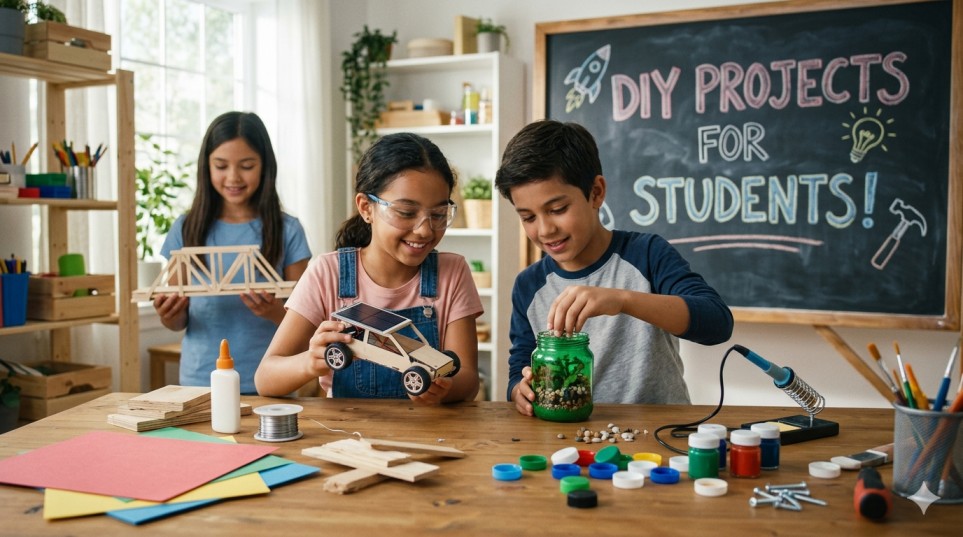
Diy Projects for Students: Creative Ways to Learn and Grow
Introduction
In the modern educational landscape, diy projects for students have become an essential tool for fostering creativity and practical skills. Engaging in diy projects for students allows young learners to move beyond the theoretical constraints of textbooks and explore the tangible world of hands-on creation. These diy projects for students serve as a bridge between academic concepts and real-world applications, making complex ideas much easier to grasp. Whether it is a simple craft or a complex scientific model, diy projects for students encourage critical thinking and problem-solving abilities that are vital for future success. Parents and teachers often look for diy projects for students because they provide a productive outlet for energy while building self-confidence through the completion of a physical task. The beauty of diy projects for students lies in their versatility, as they can be tailored to any age group or interest level. By incorporating diy projects for students into daily routines, we can nurture a generation of innovators who are not afraid to experiment and fail. This article explores a wide range of diy projects for students that are both educational and entertaining for everyone involved.
The Educational Value of Diy Projects for Students
The academic benefits associated with diy projects for students are immense and well-documented by educators worldwide. When children participate in diy projects for students, they activate different parts of their brain that are often dormant during passive learning sessions. These diy projects for students help in developing fine motor skills and hand-eye coordination, especially in younger age groups. Furthermore, diy projects for students teach the importance of following instructions and planning ahead to achieve a specific goal. Many diy projects for students involve measuring and calculating, which naturally reinforces mathematical skills without the pressure of a formal classroom environment. Scientific curiosity is also piqued through diy projects for students that involve chemistry or physics experiments conducted safely at home. Ultimately, diy projects for students make the learning process more enjoyable and memorable for the learner.
| Learning Method | Primary Benefit |
|---|---|
| Traditional Reading | Information absorption through text |
| Diy Projects for Students | Knowledge application through physical action |
Science-Based Diy Projects for Students
Science-focused diy projects for students are perfect for those who have a natural curiosity about how the world functions. One of the most popular diy projects for students is the classic baking soda volcano, which demonstrates chemical reactions in a visually stunning way. Other diy projects for students include building simple circuits or solar-powered ovens to understand energy transformation and electricity. These diy projects for students allow participants to see scientific theories in motion, which solidifies their understanding of the subject matter. When performing these diy projects for students, safety should always be a priority, requiring adult supervision for certain steps. The sense of wonder generated by these diy projects for students can spark a lifelong interest in STEM fields. Exploring diy projects for students in the field of science is a great way to spend a weekend afternoon productively.
| Project Type | Scientific Focus |
|---|---|
| Volcano Model | Chemical reaction between acid and base |
| Simple Circuit | Flow of electrons and electrical conductivity |
Artistic and Creative Diy Projects for Students
For those who lean toward the humanities, artistic diy projects for students offer a wonderful way to express inner emotions and thoughts. These diy projects for students can include anything from painting and pottery to creating intricate paper-mache sculptures. Engaging in artistic diy projects for students helps in refining aesthetic senses and understanding color theory and spatial relationships. Teachers often use these diy projects for students to help children relax and de-stress after intensive exam periods. The freedom found in diy projects for students related to art allows for unique self-expression that is often missing in standardized testing. Every piece created during these diy projects for students is a unique reflection of the student’s personality and hard work. Encouraging diy projects for students in the arts ensures a well-rounded and balanced educational experience.
Technology and Coding Diy Projects for Students
In the digital age, diy projects for students have evolved to include computer science and basic robotics. Simple coding diy projects for students can involve building a personal website or creating a basic video game using visual programming languages. These diy projects for students are incredibly relevant in today’s job market and provide a competitive edge to those who start early. Hardware-based diy projects for students, such as assembling a small computer or a programmable robot, are also highly engaging. By working on these diy projects for students, learners understand the logic behind the devices they use every day. The troubleshooting aspect of tech-based diy projects for students builds resilience and logical thinking patterns. As technology continues to grow, the importance of these diy projects for students will only increase.
| Tech Focus | Skill Developed |
|---|---|
| Web Design | Visual layout and basic coding logic |
| Robot Building | Mechanical assembly and hardware interface |
Eco-Friendly and Sustainable Diy Projects for Students
Teaching environmental responsibility is easy through diy projects for students that focus on recycling and upcycling. These diy projects for students involve taking household waste, like plastic bottles or cardboard boxes, and turning them into useful items like planters or storage bins. Engaging in sustainable diy projects for students helps children understand the value of resources and the impact of waste on the planet. Many schools are now integrating these diy projects for students into their “Green Week” activities to promote eco-consciousness. Creating a small compost bin or a rainwater collection system are excellent diy projects for students that have a direct positive impact on the environment. These diy projects for students prove that you do not need expensive materials to create something valuable and functional. Sustainability-focused diy projects for students empower the youth to take charge of their environmental future.
Mathematics Made Fun Through Diy Projects for Students
Many people find math intimidating, but diy projects for students can turn abstract numbers into tangible shapes and structures. Building geometric models is one of the diy projects for students that helps in visualizing 3D shapes and understanding volume and surface area. These diy projects for students might also involve creating a “math clock” or a personalized abacus to practice basic arithmetic. When students use their hands for diy projects for students, they often find that mathematical concepts become much less frightening. Budgeting for diy projects for students is also a practical way to learn about financial literacy and resource management. The precision required for successful diy projects for students naturally demands accuracy in measurement and calculation. Ultimately, math-related diy projects for students bridge the gap between the chalkboard and the real world.
| Math Topic | Project Application |
|---|---|
| Geometry | Constructing polyhedral shapes with straws |
| Measurement | Scaling a wooden birdhouse design |
Home Improvement Diy Projects for Students
Practical life skills can be gained through diy projects for students that involve minor home repairs or improvements. Learning how to fix a leaky faucet or paint a room under supervision are diy projects for students that provide lasting value. These diy projects for students teach self-reliance and the satisfaction of maintaining one’s own living space. While some may think these diy projects for students are too advanced, with proper guidance, they are perfectly manageable for teenagers. Understanding how basic home systems work through diy projects for students can save a lot of money and stress in adulthood. These diy projects for students also encourage a sense of ownership and pride in the family home. Practicality is a core pillar of many successful diy projects for students.
The Role of Mentorship in Diy Projects for Students
While diy projects for students are meant to be student-led, the role of a mentor or parent is crucial for safety and guidance. A mentor can help narrow down the best diy projects for students based on the individual’s current skill level and interests. During diy projects for students, mentors should offer encouragement rather than doing the work for the student. This balance ensures that the diy projects for students remain a learning experience rather than a chore. Discussing the “why” behind each step of diy projects for students deepens the educational impact significantly. Mentors can also help source the necessary materials for diy projects for students, ensuring that the process is smooth and enjoyable. The bond created between a mentor and a learner during diy projects for students is often very strong and lasting.
| Role | Responsibility |
|---|---|
| Student | Execution, experimentation, and creative input |
| Mentor | Safety supervision, sourcing tools, and guidance |
Resource Management and Diy Projects for Students
Successful diy projects for students often depend on how well the participant manages their available resources. This includes time management, as many diy projects for students require several days for glue to dry or paint to set. Planning the budget for diy projects for students teaches financial responsibility and the importance of comparing prices for materials. Often, the best diy projects for students are the ones that use items already available in the kitchen or garage. Learning to improvise when a specific tool is missing is a key skill developed during diy projects for students. This resourcefulness is a secondary benefit of diy projects for students that applies to all areas of life. Efficient resource management ensures that diy projects for students remain fun and do not become a source of frustration. Every resource saved during diy projects for students is a lesson in efficiency.
Conclusion
In conclusion, the integration of diy projects for students into the learning journey offers unparalleled benefits that go far beyond the finished product. We have seen how diy projects for students can transform difficult subjects like science and math into exciting adventures of discovery. Furthermore, diy projects for students provide a much-needed break from digital screens, allowing for physical engagement with the environment. By participating in diy projects for students, young people develop the grit and determination required to see a task through to its completion. These diy projects for students are not just about building things; they are about building character, confidence, and a curious mind. As we move forward, it is essential that we continue to support and fund diy projects for students in both home and school settings. The skills gained from diy projects for students will serve them for a lifetime, regardless of the career path they eventually choose. Let us embrace diy projects for students as a fundamental part of a holistic and joyful education.