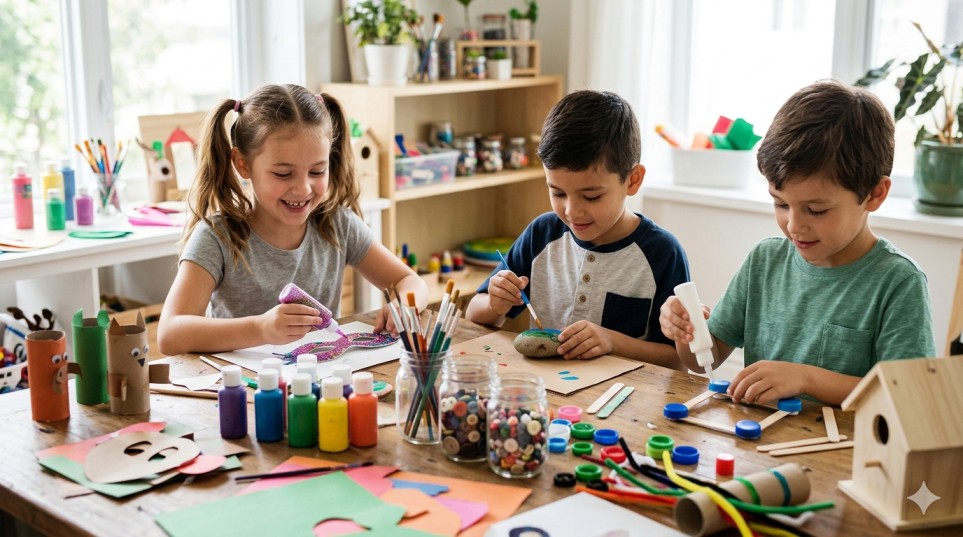
DIY Projects for Kids: Nurturing Creativity and Practical Skills
Introduction
Engaging in DIY projects for kids is one of the most rewarding ways to foster a child’s natural curiosity and developmental growth. In a world increasingly dominated by digital screens, DIY projects for kids offer a vital tactile experience that encourages children to use their hands and minds simultaneously. These DIY projects for kids are not merely hobbies; they are essential learning tools that teach patience, problem-solving, and the value of hard work. When children participate in DIY projects for kids, they learn how to follow instructions while also discovering the freedom to innovate and experiment. Whether it is a simple rainy-day craft or a complex weekend building task, DIY projects for kids provide a platform for self-expression and emotional development. Parents and educators often find that DIY projects for kids bridge the gap between theoretical school lessons and real-world application. By dedicating time to DIY projects for kids, we help the younger generation build confidence and a sense of accomplishment that lasts a lifetime. This article will explore a wide variety of DIY projects for kids designed to inspire, educate, and entertain children of all ages.
The Cognitive Benefits of DIY Projects for Kids
The mental stimulation provided by DIY projects for kids is immense and scientifically recognized as beneficial for brain development. When a child starts one of many available DIY projects for kids, they are required to plan ahead and visualize a final result. This planning stage of DIY projects for school or home helps in developing executive function and foresight. Furthermore, DIY projects for kids involving measurement and cutting naturally reinforce basic mathematical concepts in a fun, pressure-free environment. Fine motor skills are also significantly improved through DIY projects for kids that involve painting, threading, or assembling small parts. By tackling the challenges inherent in DIY projects for kids, children develop resilience and learn that mistakes are simply opportunities for learning. Ultimately, DIY projects for kids serve as a foundation for logical thinking and creative intelligence that will benefit them throughout their academic and professional lives.
| Learning Method | Primary Developmental Focus |
|---|---|
| Passive Screen Time | Entertainment through visual consumption without interaction |
| DIY Projects for Kids | Active learning through physical creation and problem-solving |
Science-Based DIY Projects for Kids
Exploring the wonders of science through DIY projects for kids makes complex subjects like physics and chemistry feel like magic. One of the most classic DIY projects for kids is the baking soda and vinegar volcano, which teaches chemical reactions in a visually explosive way. Other scientific DIY projects for kids include building a homemade compass or a simple periscope to understand light and magnetism. These DIY projects for kids allow children to test hypotheses and observe outcomes in real-time. When kids engage in these DIY projects for kids, they start to ask “why” and “how,” which is the very essence of the scientific method. Using recycled materials for these DIY projects for kids also introduces the concept of environmental responsibility. Every scientific DIY projects for kids session is an adventure into the unknown that sparks lifelong curiosity. Parents should always supervise these DIY projects for kids to ensure safety while encouraging independent exploration.
Artistic DIY Projects for Kids and Self-Expression
Artistic DIY projects for kids are essential for emotional health, allowing children to express feelings that they might not yet have the words for. These DIY projects for kids can include anything from finger painting and clay modeling to creating intricate tie-dye patterns on old t-shirts. Engaging in creative DIY projects for kids helps children develop their own unique aesthetic and personal style. Unlike structured schoolwork, these DIY projects for kids offer a “no-wrong-answer” environment that boosts self-esteem. Many DIY projects for kids in the arts focus on color theory and spatial relationships without the child even realizing they are learning. Setting up a dedicated space for these DIY projects for kids allows them to get messy and truly immerse themselves in the creative process. Sharing the results of these DIY projects for kids with family members creates a sense of pride and social connection. Artistic DIY projects for kids are a wonderful way to spend quality time together as a family.
| Activity Type | Creative Outcome |
|---|---|
| Structured Drawing | Following specific lines to create a pre-defined image |
| DIY Projects for Kids (Art) | Creating original works based on personal imagination and emotion |
Nature-Inspired DIY Projects for Kids
Connecting children with the outdoors through DIY projects for kids is a great way to teach them about biology and ecology. Simple DIY projects for kids like building a bird feeder or starting a small herb garden in a window box provide daily interaction with nature. These DIY projects for kids teach children about the life cycles of plants and the needs of local wildlife. Watching a seed grow into a plant during these DIY projects for kids fosters a sense of responsibility and patience. Other nature-themed DIY projects for kids include collecting and pressing leaves or painting smooth river stones. By participating in these DIY projects for kids, children learn to respect and protect the natural world around them. Outdoor DIY projects for kids also provide much-needed fresh air and physical activity. These DIY projects for kids prove that you don’t need expensive toys to have a great time and learn something new.
Engineering and Building DIY Projects for Kids
For children who love to see how things work, engineering-focused DIY projects for kids are the perfect outlet for their energy. These DIY projects for kids might involve building a bridge out of popsicle sticks or creating a rubber-band-powered car. Working on these DIY projects for kids introduces fundamental concepts of structural integrity and energy transfer. When a structure fails in these DIY projects for kids, the child must analyze the weakness and find a solution, which is a core engineering skill. Many DIY projects for kids in this category use simple household items like cardboard, tape, and glue. These DIY projects for kids encourage children to look at common objects in a new, functional way. Successfully completing a building-based DIY projects for kids gives a child a huge boost in confidence. Engineering DIY projects for kids are the first step toward a future in design or construction.
| Project Category | Primary Skill Gained |
|---|---|
| Reading about Buildings | Acquiring facts about architecture and famous structures |
| DIY Projects for Kids (Building) | Understanding physical balance and structural strength through trial |
Eco-Friendly Upcycling DIY Projects for Kids
Teaching the value of sustainability is easy and fun when you focus on upcycling DIY projects for kids. These DIY projects for kids involve taking old items, like plastic bottles or egg cartons, and turning them into something useful or decorative. Engaging in eco-friendly DIY projects for kids helps children understand the importance of reducing waste and preserving resources. For example, DIY projects for kids could involve turning an old cereal box into a desk organizer or a magazine holder. These DIY projects for kids teach that creativity can solve environmental problems. Many schools now incorporate these DIY projects for kids into their Earth Day celebrations to promote green living. By choosing DIY projects for kids that use recycled materials, parents save money while teaching a valuable life lesson. Upcycling DIY projects for kids are limited only by a child’s imagination.
Mathematics Made Practical Through DIY Projects for Kids
Many children struggle with abstract math, but DIY projects for kids can turn numbers into tangible, understandable concepts. Any DIY projects for kids that requires measuring wood, fabric, or liquids is a practical math lesson in disguise. These DIY projects for kids help children visualize fractions, lengths, and volumes in a real-world context. For instance, DIY projects for kids like baking or woodworking require precise calculations to be successful. When a child sees the direct result of their math work in their DIY projects for kids, the subject becomes much more interesting. These DIY projects for kids remove the “boredom” often associated with worksheets and textbooks. Budgeting for DIY projects for kids materials is also a great way to teach basic financial literacy. Practical math through DIY projects for kids is a skill that will stay with them forever.
| Approach to Math | Child’s Perspective |
|---|---|
| School Worksheets | Abstract numbers that sometimes feel disconnected from reality |
| DIY Projects for Kids | Useful tools needed to finish a project they are excited about |
Home Improvement and Handy DIY Projects for Kids
Teaching children how to be handy around the house through DIY projects for kids is a great way to build their independence. Simple DIY projects for kids like painting a birdhouse or helping to assemble a small piece of furniture under supervision are very rewarding. These DIY projects for kids teach tool safety and the importance of maintaining one’s environment. When children contribute to the home through DIY projects for kids, they feel like valued members of the family. These DIY projects for kids also provide a sense of ownership and pride in their living space. While these DIY projects for kids require adult guidance, the child should be allowed to do as much as safely possible. Learning these basic skills through DIY projects for kids prepares them for the responsibilities of adulthood. Handyman DIY projects for kids are practical, fun, and extremely useful.
Troubleshooting and Problem Solving in DIY Projects for Kids
The path to completing DIY projects for kids is rarely a straight line, and that is exactly where the best learning happens. When a child encounters a problem in their DIY projects for kids, they must stop and think about a new approach. This process of troubleshooting within DIY projects for kids builds resilience and logical reasoning. Instead of fixing the problem for them, parents should guide the child to find their own solution for their DIY projects for kids. Overcoming an obstacle in DIY projects for kids is often more satisfying than the final product itself. These DIY projects for kids teach that failure is not a dead end, but a chance to try a different method. Every mistake made in DIY projects for kids is a lesson in patience and determination. The ability to solve problems is the most valuable “tool” a child gains from DIY projects for kids.
| Common Obstacle | Skill Developed |
|---|---|
| Project material breaks | Resilience and finding creative ways to repair or replace |
| DIY Projects for Kids failure | Critical analysis to understand what went wrong and how to fix it |
Conclusion
In conclusion, the impact of DIY projects for kids on a child’s development cannot be overstated, as these activities offer a perfect blend of education and fun. We have seen how DIY projects for kids can improve cognitive abilities, fine motor skills, and even emotional resilience through hands-on learning. Whether a child is exploring science, art, or engineering, DIY projects for kids provide a safe space for curiosity and innovation to thrive. By encouraging DIY projects for kids, parents and teachers are giving children the tools they need to become confident, independent thinkers. These DIY projects for kids also provide a much-needed break from the digital world, fostering a deeper connection with the physical environment. Every DIY projects for kids completed is a memory made and a skill learned that will serve the child for years to come. Ultimately, DIY projects for kids are about more than just making things; they are about making future leaders and creators. Let us continue to support DIY projects for kids as a vital part of a happy and healthy childhood.